When unexpected financial needs arise—whether it is a medical emergency, home renovation, or consolidating existing high-interest debt—a personal loan is often one of the most accessible financing options available.
Unlike auto loans or mortgages, personal loans give borrowers total flexibility on how the funds are spent. Here is a complete breakdown of how personal loans work, their main features, the costs involved, and how to choose the right lender.
What is a Personal Loan?
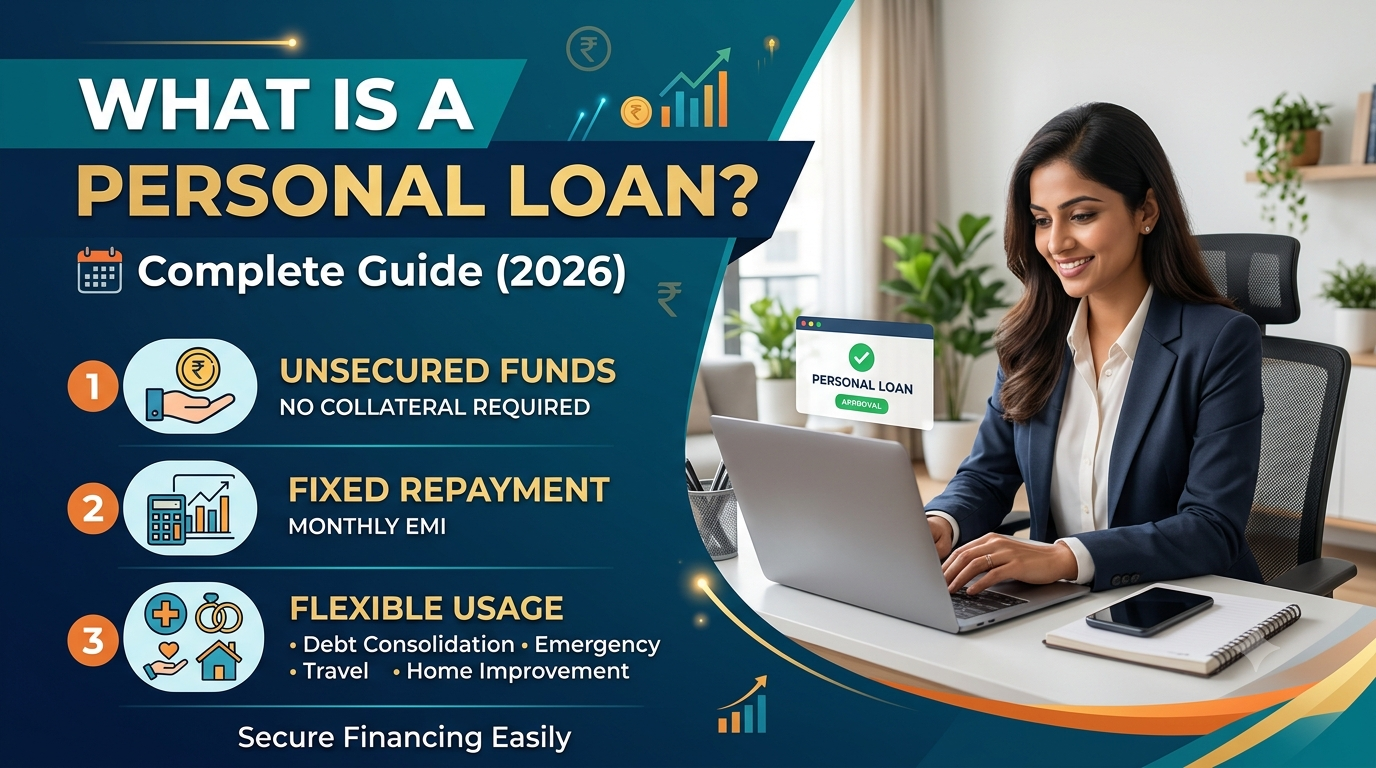
A personal loan is an unsecured installment loan. “Unsecured” means you do not need to offer collateral—such as your house, car, or fixed deposits—to secure the money.

Instead, lenders approve your application based on your financial health, including your credit score, income level, and employment history. Once approved, you receive a lump sum of money, which you pay back in fixed monthly installments (EMIs) over an agreed period, usually ranging from 12 to 60 months.
Key Features of Personal Loans
- No Collateral Required: You do not risk losing personal property if you face financial hardship, making it lower risk for the borrower in terms of assets.
- Flexible Use of Funds: Lenders rarely restrict how you use the disbursed amount. Common uses include debt consolidation, major purchases, weddings, travel, or medical bills.
- Fixed Interest Rates & Monthly Payments: Most personal loans come with fixed interest rates. This means your monthly payment remains predictable throughout the tenure of the loan.
- Quick Disbursal: Thanks to modern digital banking, online approvals and document verification can often be completed within 24 to 48 hours.
Types of Lenders: Where Should You Apply?
Choosing the right lender depends on your credit profile, how quickly you need the money, and your preferred application method:
- Traditional Banks: Best for existing customers with strong credit scores (750+). They usually offer the lowest interest rates and higher loan limits, though their approval process can take slightly longer.
- Credit Unions: Member-owned non-profits that often provide lower interest rates and more flexible approval criteria than major commercial banks.
- Online Lenders & NBFCs: Ideal for fast, 100% digital applications or borrowers with fair/average credit scores. Processing is fast, though interest rates may be slightly higher.
Costs and Fees: Understanding the Real Price
The cost of a personal loan is more than just its interest rate. To know the true cost, always look at the Annual Percentage Rate (APR), which combines the interest rate and all upfront fees.

- Interest Rate: Depends heavily on your credit score and financial profile. High-credit borrowers receive the best available rates, while lower scores result in higher rates to balance the lender’s risk.
- Origination / Processing Fee: Lenders often charge an upfront processing fee (typically 1% to 6% of the total loan amount). This fee is usually deducted directly from the money transferred to your bank account.
- Prepayment / Foreclosure Charges: If you decide to pay off your loan earlier than scheduled, some lenders charge a penalty (around 1% to 4% of the remaining balance).
- Late Payment Penalties: Missing an EMI deadline incurs late fees and damages your credit score.
Important Tips Before Applying
- Check Your Credit Score First: Review your credit report before applying to ensure there are no errors and to know where you stand.
- Compare APRs, Not Just Interest Rates: A loan with a lower interest rate might end up costing more if it charges a high origination fee.
- Keep Debt-to-Income Low: Ensure your total monthly debt repayments (including the new loan) do not consume more than 40% to 50% of your monthly income.
- Avoid Applying Everywhere at Once: Submitting multiple loan applications in a short period triggers multiple hard credit checks, which temporarily lowers your credit score.
Conclusion
A personal loan can be a powerful financial tool to manage major expenses or consolidate high-interest credit card debt into a single, manageable payment. By comparing APRs across multiple banks and online lenders, you can secure the best terms and keep your borrowing costs as low as possible.